Programme
The detailed program can be downloaded here.
| Sunday, 28 June 2026 | Monday, 29 June 2026 | Tuesday, 30 June 2026 |
| =================== | ================================ | ========================== |
| 08:30 Registration | 08:30 Registration | |
| 9:00-13:00 Technical Program | 09:00-13:00 Technical Program | |
| 14:00-17:00 Technical Program | 14:00-15:30 ITG FA Meeting | 18:00 Welcome Dinner at Spreewehrmühle | 19:00 Social Event at Cavalierhaus Branitz incl. Dinner |
Welcome Dinner Sunday Evening
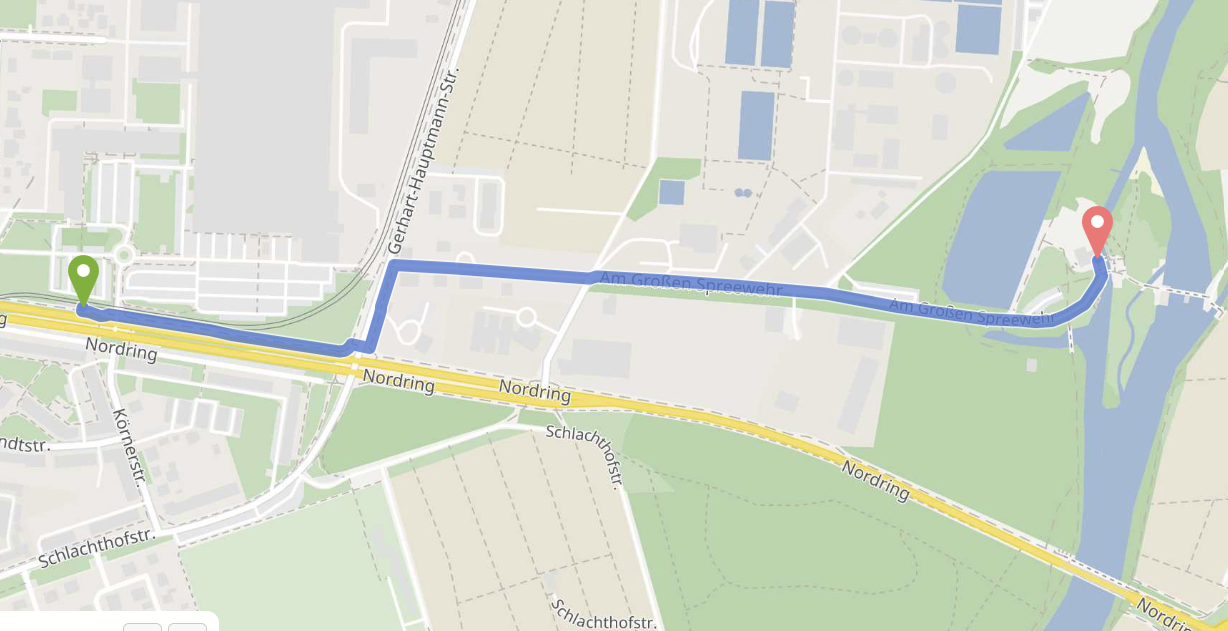
The Welcome Dinner on Sunday, June 28th will take place at the Spreewehrmühle, beginning at 18:00 CET.
Address: Am Großen Spreewehr 3, 03044 Cottbus, Germany
You can reach Spreewhermühle by taking Tram Line 4 in the direction Neu Schmellwitz, leave at "Nordring/Am TKC" and take a 5-10 minute walk as shown in the picture below.
Social Event Monday Evening
The Social Event will take place Monday, June 29th, 19:00 at the Cavalierhaus Branitz in the beautiful Park Branitz. Anyone who is interested can join our hiking tour beginning at Holiday Inn, Cottbus, at 17:30 (~60 Minutes walking distance).
Address: Zum Kavalierhaus 9, 03042 Cottbus, Germany
Keynote Speakers
| Speaker: Dr. Mahdi Taheri | |
| Title: Don't Trust Every Pixel | |
| Abstract: Modern image processing systems increasingly rely on deep neural networks to perform tasks such as image classification and object detection. While these models often achieve remarkable accuracy, their resilience can be severely affected by subtle perturbations originating from hardware faults, environmental disturbances, or adversarial attacks. Surprisingly, changes that are imperceptible to humans can lead to significant degradation in model performance and potentially unsafe decisions. This talk explores the dependability challenges of AI-based image processing systems, highlighting how faults and attacks propagate through deep neural networks and impact their behavior. | |
| About Dr. Mahdi Taheri: Mahdi Taheri received his B.Sc. degree in Electrical Engineering in 2017 and his M.Sc. degree in Electrical Engineering in 2021. He obtained his Ph.D. in Computer Systems from Tallinn University of Technology (TalTech), Estonia, in January 2025. During his doctoral studies, he gained industry-oriented research experience through a six-month internship at IHP – Leibniz Institute for High Performance Microelectronics, Germany. Since January 2025, he has been working as a Postdoc researcher at Brandenburg University of Technology (BTU) Cottbus-Senftenberg, Germany, while continuing as a part-time researcher at TalTech. He leads the Reliable and Secure Systems (RSS) team, with research focused on reliable and secure AI systems, neuromorphic computing, approximate computing, and hardware accelerators. | 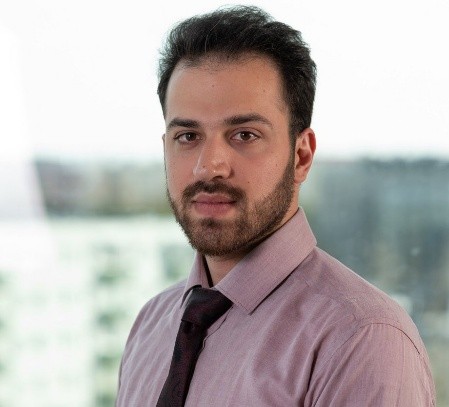
|
| Speaker: Thomas Maugey, Senior Researcher at INRIA, Rennes, France | |
| Title: Accuracy, Efficiency, Sufficiency: Three Pillars for the Sustainability of Video Streaming | |
| Abstract: Video streaming technology contributes significantly to digital emissions and is a illustrative example of an unlimited and energy-intensive digital system. In order to target a reduction of its environmental footprint, three research directions are currently being explored. The first one involves accurately measuring and modeling the energy and resources required for video delivery. A second research axis aims at optimizing the video delivery chain by reducing its energy and resources consumption. While crucial, these two research paths are insufficient to achieve an overall reduction in the environmental impact of video streaming systems. Indeed, it is also necessary to aim for a reduction, or at least a limitation, in the global volume of video. This third area of research is inherently multidisciplinary, as it requires consideration of the uses and socioeconomic context of video streaming technology, and involves the identification of potential regulations. This presentation will review the most relevant methods and initiatives developed in these three directions. | |
| About Thomas Maugey Thomas Maugey graduated from École Supérieure d’Electricité, Supélec, Gif-sur-Yvette, France in 2007. He received the M.Sc. degree in fundamental and applied mathematics from Supélec and Université Paul Verlaine, Metz, France, in 2007. He received his Ph.D. degree in Image and Signal Processing at TELECOM Paris-Tech, Paris, France, in 2010. From October 2010 to October 2014, he was a postdoctoral researcher at the Signal Processing Laboratory (LTS4) of the Swiss Federal Institute of Technology (EPFL), Lausanne, Switzerland. From November 2014 to October 2023, he was Research Scientist at Inria. Since October 2023, he has been Research Director at Inria. His research deals with image and video processing/compression, graph-based signal processing and digital sobriety. | 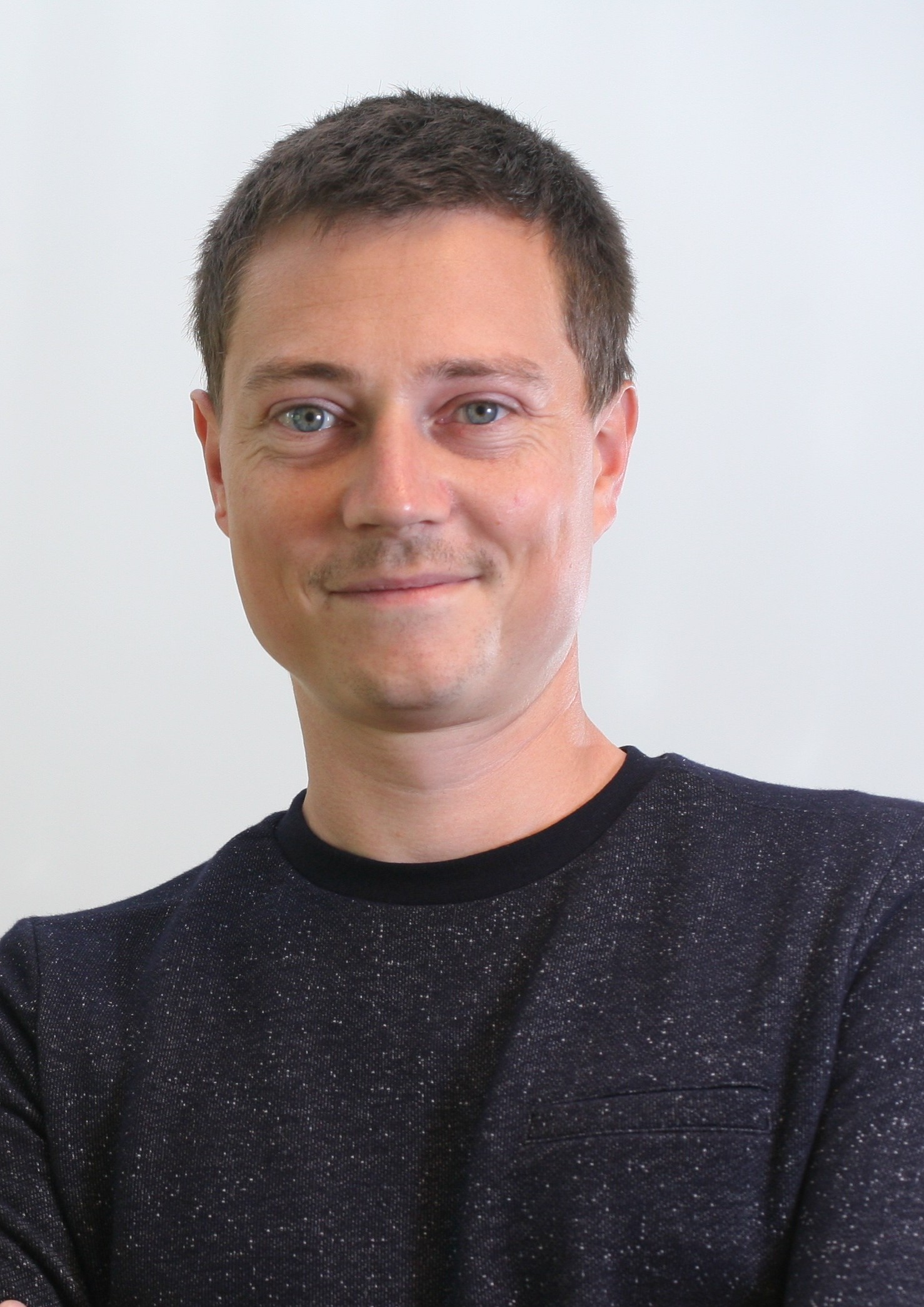
|