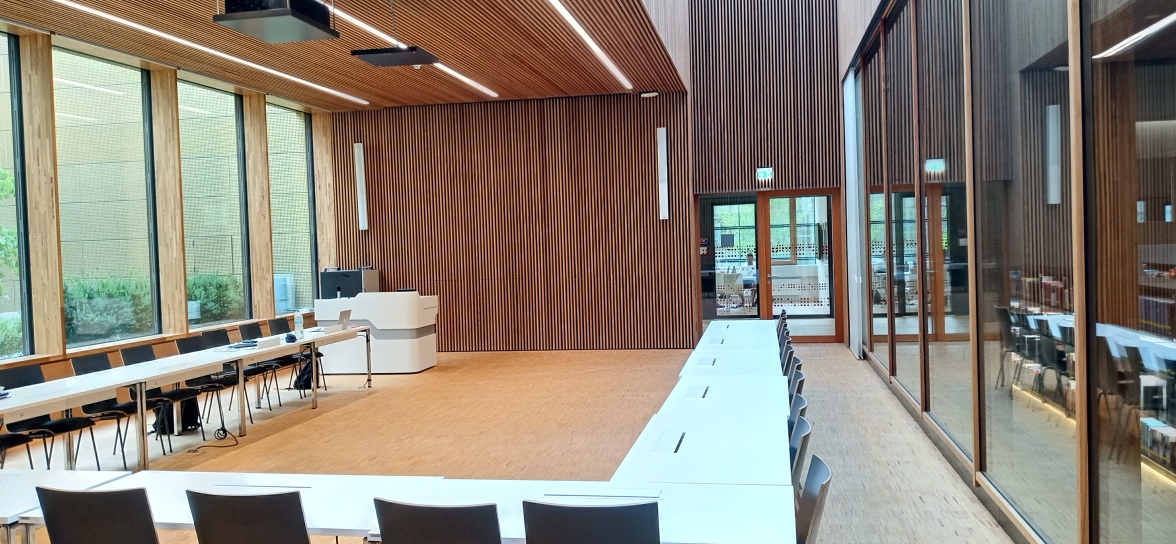
Programme
| Sunday, 13 July 2025 | Monday, 14 July 2025 | Tuesday, 15 July 2025 |
| =================== | ================================ | ========================== |
| 08:00 Reception and Preparation | 08:30 Reception and Preparation | |
| 08:30 Welcome and Keynote by Sebastian Schwarz (Nokia) |
08:50 Keynote by Eugen Wige and Kristian Fischer (Valeo, Kronach) | |
| 09:50 Session 1: Learned Compression + | 09:50 Session 4: HDR | |
| 10:50 Coffee Break | 10:50 Coffee Break | |
| 11:20 Session 2: VVC + | 11:20 Session 5: Signal Processing + | |
| 12:20 Awards, Summary, and Closure | ||
| 12:50 Lunch Break at canteen | 12:50 Lunch Break at canteen | |
| 14:00 Session 3: XR + Point Cloud | 14:00 ITG experts meeting | |
| 15:00 Poster Session | 15:00 Coffee break | |
| 15:30 Coffee break | 16:30 End | |
| 17:00 Spare Time | ||
| 18:00 Welcome Dinner | 18:00 Social Event at Creapolis/Makerspace incl. Dinner |
The detailed program is available here: SVCP 2025 programme.
Joint Dinner on Sunday Evening
We will have a joint dinner at the Münchner Hofbräu Coburg on Sunday evening 13 July 2025, beginning at 18:00 CET.
Address: Kleine Johannisgasse 8, 96450 Coburg, Germany
Keynote Information
| Speaker: Dr. Sebastian Schwarz | |
| Title: Future of Video - What’s on the horizon? | |
| Abstract: Video content becomes more diverse. Video consumption becomes more diverse. Video consumers become more diverse. The race for resolution is cooling down. Now we look for better pixel, rather than just more pixel. Efficient coding & distribution fuels the rise of short-form video. But it’s not just humans looking at video anymore. The machines are taking over. How will we ensure the continuation of the video success story? | |
| About Dr. Sebastian Schwarz: Sebastian Schwarz is Head of the Video Coding Systems at Nokia Technologies and Bell Labs Distinguished Member of Technical Staff. He and his team research, develop and productize a wide range of video coding and transmission technologies, and play an active role in international media standardization. Sebastian has authored over 50+ conference and journal papers on immersive media and video coding topics, submitted 100+ contributions to various standardization bodies, and holds over 30 granted patents. He served as editor of the ISO/IEC International Standard for video-based point cloud compression (ISO/IEC 23090-5) and as Co-Chair of the MPEG Ad Hoc Groups on Future Video Coding and on System Technologies for V-PCC. Sebastian received a Dipl.-Ing. degree from the Technical University of Ilmenau, Germany, in 2009, his Ph.D. from Mid Sweden University, Sweden, in 2014, and an MBA degree from Tampere University in 2018. | 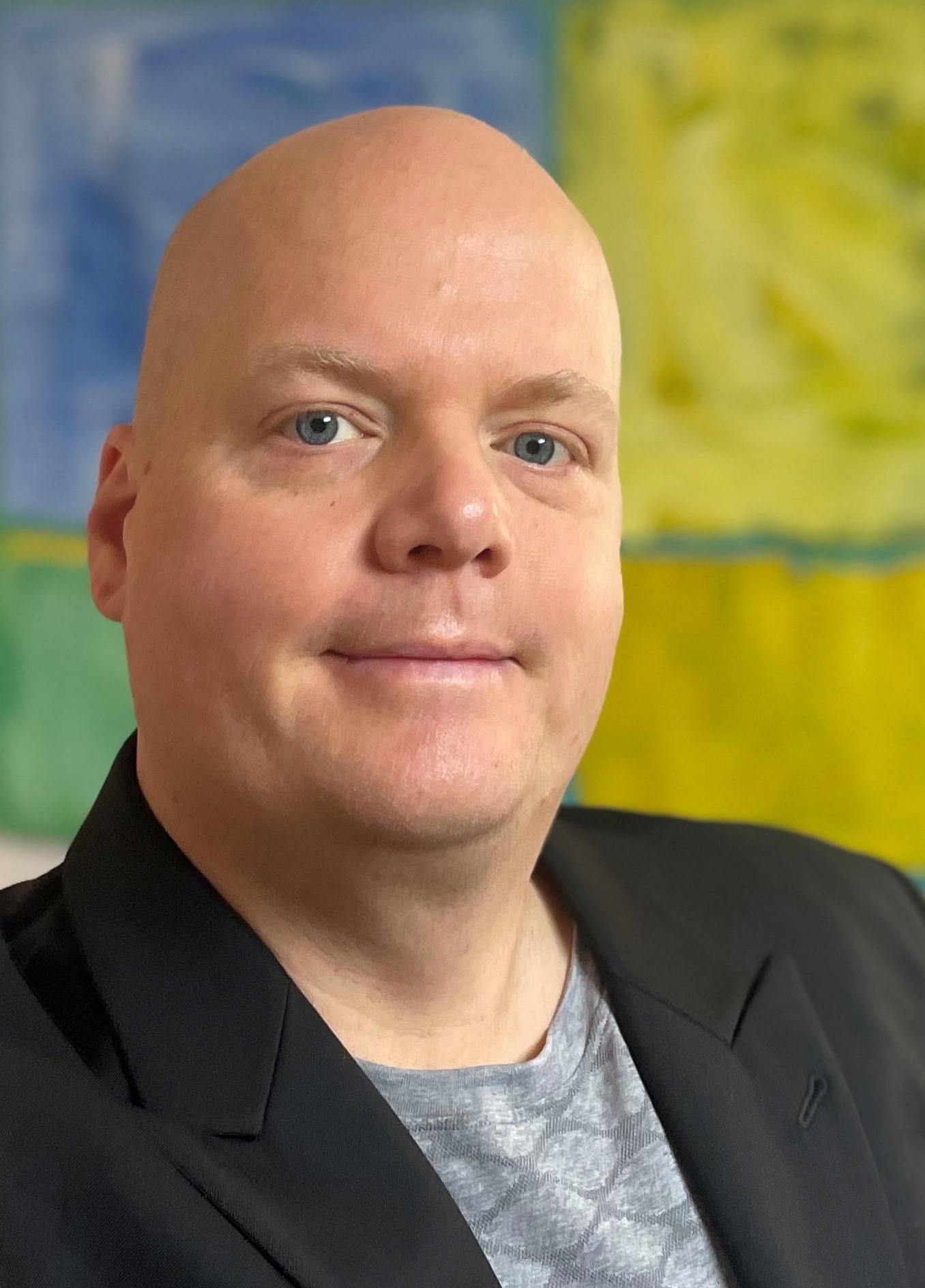
|
| Speaker: Dr. Eugen Wige and Dr. Kristian Fischer | |
| Title: From Sensor to Decision - Insights into the Development of Autonomous Driving Systems with a Focus on Teleoperation | |
| Abstract: Autonomous driving is more than just an algorithm - it is a complex interplay of sensor technology, real-time data processing, communication and functional safety. This presentation will provide a practical insight into current developments in the field of automated mobility, with a special focus on teleoperation as a fallback level in challenging driving situations. Using a real development site as an example, the presentation will show how modern sensor technologies, multimodal data fusion and communication systems are interlinked - and what role video compression plays as a technical enabler for safe remote control. The presentation will also give a little insight how system integration takes place and the challenges of scaling such solutions - from the lab demo to fleet testing. | |
| About Dr. Eugen Wige: Dr Eugen Wige holds a doctorate in electrical engineering and has proven expertise in the fields of video processing, communication systems, ADAS (Advanced Driver Assistance Systems) and digital mobility solutions. As R&D Director Digital Services at Valeo, he leads the development of innovative platforms for applications such as teleoperation, automated driving and remote visualisation. At the same time, he acts as a senior expert, particularly in the fields of video compression, real-time streaming and sensor-based driving functions. Previously, he worked for several years at Citrix Mobility Apps in Dresden, where he worked as a Senior Software Engineer II on cloud-based systems for video transmission, Google VP9 integration and real-time communication. He started his scientific career at the Friedrich-Alexander-University Erlangen-Nuremberg focussing on H.264/HEVC, near-lossless compression and the development of efficient video processing algorithms. He is the author of numerous publications, a multiple award-winning innovator (including the German Mobility Award and the IEEE Best Presentation Award) and the holder of numerous international patents in the fields of video, streaming and automated driving. In standardisation committees such as 5GAA, VDA, ISO, CLEPA and OICA, he actively represents Valeo and partly the German delegation on a global level. In addition to his professional activities, he has a strong personal passion for hi-fi, home cinema and multimedia technologies, including the acoustic optimisation of private rooms and networked smart home systems. | 
|
| About Dr. Kristian Fischer: Dr.-Ing. Kristian Fischer received his Ph.D. degree in Electrical Engineering from Friedrich-Alexander-Universität Erlangen (FAU) in 2023. He received his M.Sc. degree in Electrical Engineering from FAU in 2017. These studies also included a semester abroad at Minnesota State University in Mankato in the USA in 2016. For his B.Eng. in Electrical Engineering and Information Technology, he studied at the University of Applied Sciences in Aschaffenburg. Dr Fischer has been working as a software engineer at Valeo Schalter und Sensoren GmbH in Kronach since 2023. In his current position, he is responsible for reliable video transmission in the context of teleoperating cars. Previously, he worked as a scientific researcher at the Chair of Multimedia Communication and Signal Processing at the FAU in the field of image and video compression for machines. His research interests include image and video compression, video streaming, and deep neural networks. | 
|
Sponsors